iPad mini OLED vs iPad mini 7: a complete guide
Luca Tarik 6 min read
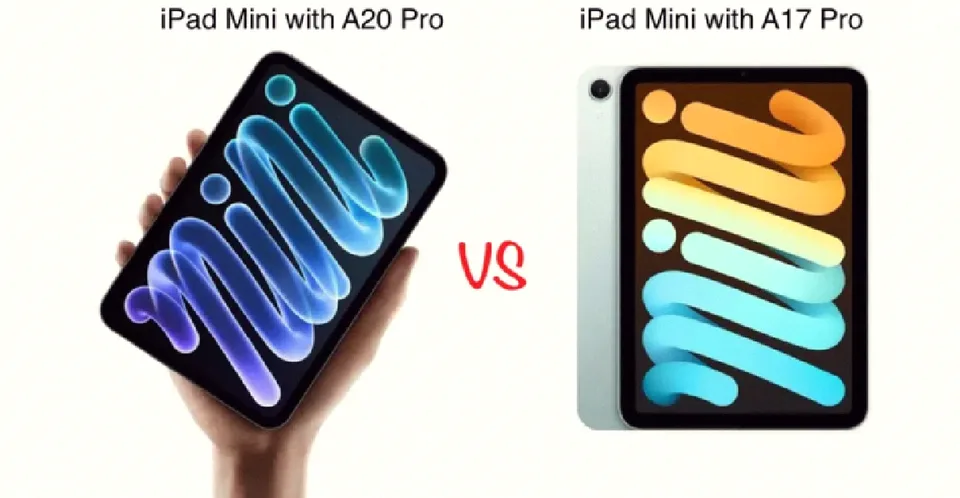
The iPad mini OLED offers a more refined display and newer chip. Understanding these differences helps you decide if the upgrade is worth it.
If you're considering an upgrade from your old iPad mini, you're in the right place. This guide breaks down the key differences between the iPad mini with an OLED screen and the previous model. You'll learn about the display, processor, design, cameras, connectivity, and price. Whether you're a creator, a gamer, or someone who values a smooth screen, this information helps you decide if the new tablet is worth the investment.
The big question isn't just about the hardware. It's about how those differences affect your daily use. The iPad mini OLED brings a more refined display, a thinner profile, and a newer chip. But it also costs more upfront. Understanding these changes helps you make a smart purchase. The information here covers everything you need to know before buying.
This article will walk you through the specs, the features, and the practical implications of the new model. You'll find clear comparisons, important warnings, and a straightforward guide to help you choose.
What changed on the display
The most noticeable difference is the screen. The iPad mini OLED moves from an 8.3-inch LCD to an 8.5-inch OLED panel. The new front bezel is also 24% narrower, making the tablet feel less bulky.
The shift to OLED technology promises deeper blacks, a better contrast ratio, and more vibrant colors. Unlike LCD, OLED can turn individual pixels off to create true black. This matters a lot when watching movies, reading, or using apps with dark interfaces.
The brightness is also a big upgrade. The OLED model reaches 600 nits on an all-screen brightness and up to 1,200 nits for HDR content, compared to the 500 nits of the previous model. The minimum brightness drops to 1 nit, which is great for reading in dim light. You might also find anti-reflective glass available, helpful if you use the tablet outdoors.
Keep in mind though: OLED does not automatically mean ProMotion at 120 Hz. The new iPad mini does not list this feature as a standard spec.
Thinner design, lighter weight
The new screen comes with a more compact design. The iPad mini OLED is only 5.4 mm thick, compared to 6.3 mm on the earlier model. The Wi-Fi version weighs 255 grams, down from 293 grams.
This difference shows up most when you hold the tablet for long periods or carry it daily. The form factor stays the same as a one-handed device for reading, note-taking, and mobile work. The color options have also narrowed to Midnight and Galaxy.
The new model introduces IP67 certification, which means temporary protection from dust and water immersion up to one meter for 30 minutes. The protection isn't permanent, so it can fade with wear. It's not a guarantee against any damage from liquids.
A20 Pro versus A17 Pro
The processor is the biggest hardware upgrade. The new iPad mini uses the Apple A20 Pro, manufactured on 2-nanometer process technology. The previous model used the A17 Pro.
According to Apple's specifications, multi-threaded performance can be up to 60% faster, while graphics performance is up to 2.7 times faster than the previous generation. For AI-related tasks, the improvement reaches up to 4.5 times.
These gains matter most for creative apps, heavy games, and AI tools. For web browsing, reading, video watching, and email, the iPad mini 7 is still a powerful device.
It's important to know that not all configurations have the same chip. The 128GB and 256GB models have a 5-core CPU and a 16-core Neural Engine. The 512GB model has a 6-core CPU and a doubled 16-core Neural Engine. The GPU is a 7-core across all models.
Audio, cameras, and charging
Several everyday features have changed. The new iPad mini includes the Acoustic Display system, designed to improve audio experience during video watching, gaming, and content playback. The audio components are integrated to deliver deeper bass and more volume.
The front camera has moved to the long side. This is more practical for video calls when using the tablet in landscape mode. Center Stage mode can automatically track the person during a call.
The rear camera stays at 12 megapixels, but the new model adds an Adaptive True Tone flash. This helps in low-light situations and for scanning documents. The iPad mini OLED also supports fast charging, allowing you to reach about 50% in 30 minutes using a charger of at least 35W. You may need to buy a separate charger.
Connectivity and price
The new iPad mini also offers faster wireless connections. It includes the Apple N1 wireless chip, which introduces support for Wi-Fi 7, Bluetooth 6, and Thread. Compared to the previous model's Wi-Fi 6E and Bluetooth 5.3, this is a significant upgrade.
The Wi-Fi + Cellular version uses the Apple C2 modem, which offers data speeds up to 50% higher than the previous generation. You can also use the screen extension feature with an external monitor through iPadOS 27.2.
The price in Italy starts at 759 euros for the Wi-Fi version and 929 euros for the Wi-Fi + Cellular version. The iPad mini 7 started at 689 euros, meaning the new model costs 70 euros more for the base Wi-Fi option. Pre-orders open on October 28, 2026, with availability starting November 6, 2026. The tablet is available in 128GB, 256GB, and 512GB storage.
Should you upgrade?
The new iPad mini represents a meaningful upgrade, especially for the OLED screen, the thinner profile, and the A20 Pro chip. It also adds IP67 certification, fast charging, and modern wireless connectivity. If you already have an iPad mini 7, the upgrade makes sense if you want a higher-quality screen, use it for video and media, or need better performance in demanding apps.
For everyday tasks like web browsing, reading, streaming, and note-taking, the iPad mini 7 is still a solid choice. The decision ultimately comes down to the actual price of your current iPad and how much you value the screen. The new model is more complete, but not everyone needs the upgrade.
FAQ
Is the new display OLED better for dark mode?
Yes. OLED can turn individual pixels off, creating true blacks. This is especially useful for apps and content with dark interfaces.
Does the new iPad mini support 120Hz ProMotion?
No, it does not. The new iPad mini does not list ProMotion at 120Hz as a standard feature.
How does the A20 Pro compare to the A17 Pro?
The A20 Pro offers up to 60% faster multi-threaded performance, 2.7x faster graphics, and 4.5x faster AI performance compared to the A17 Pro.
Is the IP67 protection permanent?
No, the IP67 rating is temporary. It can decrease with wear and is not a guarantee against all liquid damage.
Conclusion
The iPad mini OLED is a step up from the previous model for anyone who values a sharper screen, lighter weight, and modern connectivity. However, the iPad mini 7 remains a capable choice for everyday use. The decision comes down to your budget and how much you care about the display. Whether you upgrade now or wait, the new model offers clear value.